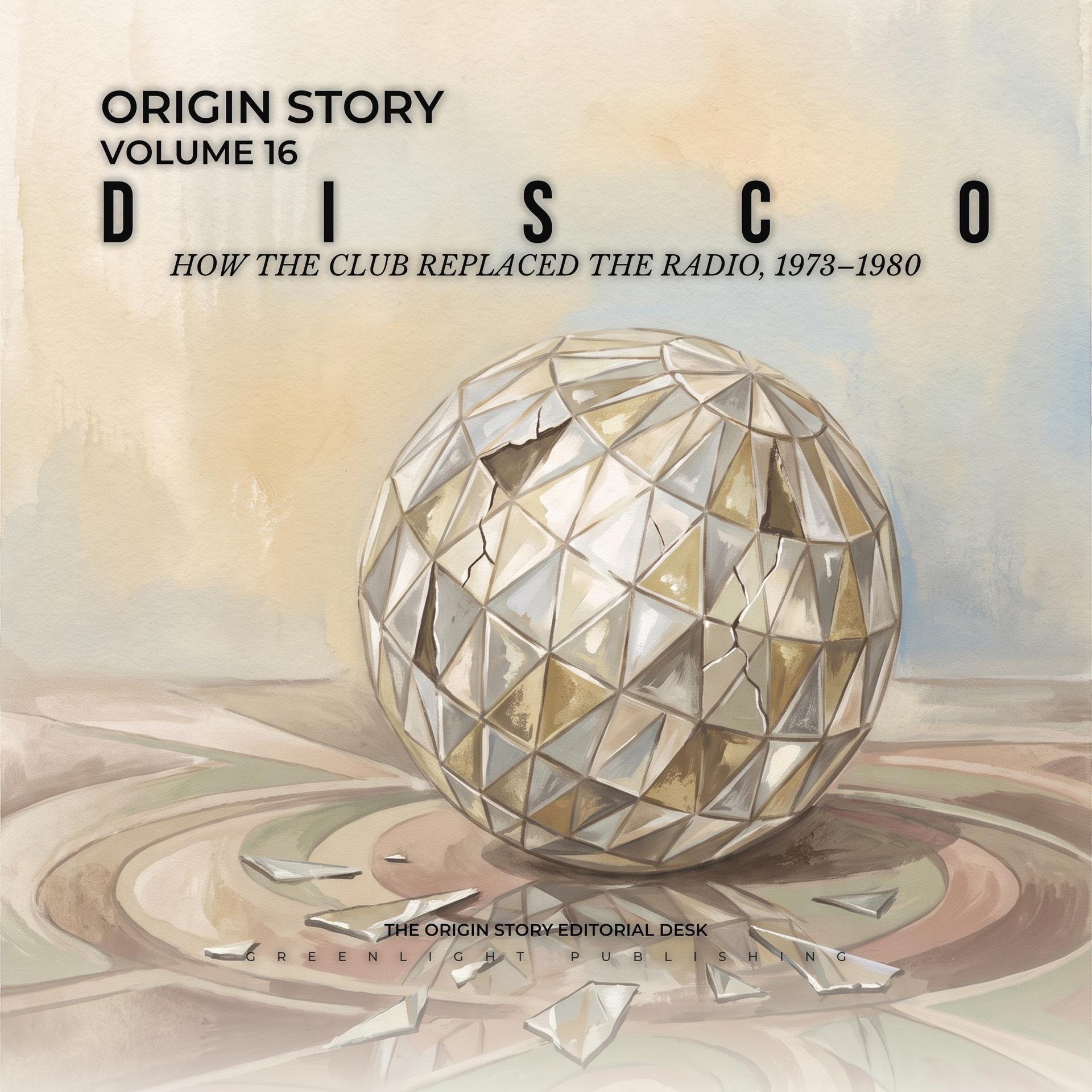
Music
DISCO
How the Club Replaced the Radio, 1973–1980
Written by The Origin Story Editorial Desk
2 hr 53 min
35 chapters
EN
Share
2 hr 53 min
Listening Time
35
Chapters
EN
Language
Greenlight Audio
Produced by
LabelsOrigin Story
About this audiobook
Synopsis
Where it started, what made it possible, who got paid, and why it ended.
In 1970 a man named David Mancuso threw an invitation-only party in a New York loft, with no licence, no alcohol and no sign on the door, for dancers the licensed nightlife of the city did not want: Black, Latino and gay New Yorkers who had almost nowhere legal to dance. By 1978 the music those rooms invented was the dominant commercial sound in America. Eighteen months later the word disco was unusable in a marketing meeting — and the music had not stopped. It was renamed, and it moved, and three of the biggest musical stories of the following decades are what it moved into.
This is the complete story of disco in about three hours. The private party with no licence to revoke, and the DJ who stopped talking and learned to blend two records into one. The mastering-room accident that produced the twelve-inch single — the only disc format in history built for the people who play records rather than the people who make them — and the club sound systems that reproduced what no home equipment could, which meant the full record only ever existed in the room. The Philadelphia session floor that built the beat, and the Munich basement where a sequencer proved the band was optional.
It takes the money seriously, because nobody else in this genre's story did until it was too late. The record pools that replaced radio promotion with free vinyl and feedback sheets. The independent labels that out-earned their size for five straight years. The session singers paid a few hundred dollars for performances on records credited to project names that sold millions — and the two women, a generation apart, who had to sue to be named as the singers of their own singing. And the cliff of 1979–80: the returns bomb, the layoffs, the artists trapped mid-contract on albums their labels would no longer promote.
It also says plainly what the record-burning at Comiskey Park was aimed at — a music made substantially by Black, Latino and gay artists for a Black, Latino and gay audience — states what is documented, quotes the arguments on both sides, and does not pretend the question is settled. The audience, it notes, did not go anywhere.
Disco is the hinge of this series: the direct parent of three other volumes. Punk reacted to it. Hip-hop was built from its parts. House is disco's survival.
Contains no song lyrics. Not one line. That is a deliberate rule, explained on the first page, and what replaces it is a description of what these records actually sound like — the hi-hat opening on the off-beats, the break where everything strips to drums, the sequencer that never tires, the falsetto climbing over machinery toward something it insists is real.
There is a playlist, sequenced to the chapters. It is called ORIGIN STORY: Disco.
Origin Story is a history of popular music, one genre at a time — from first record to last, in about three hours each. This is volume sixteen.
Chapters