Music
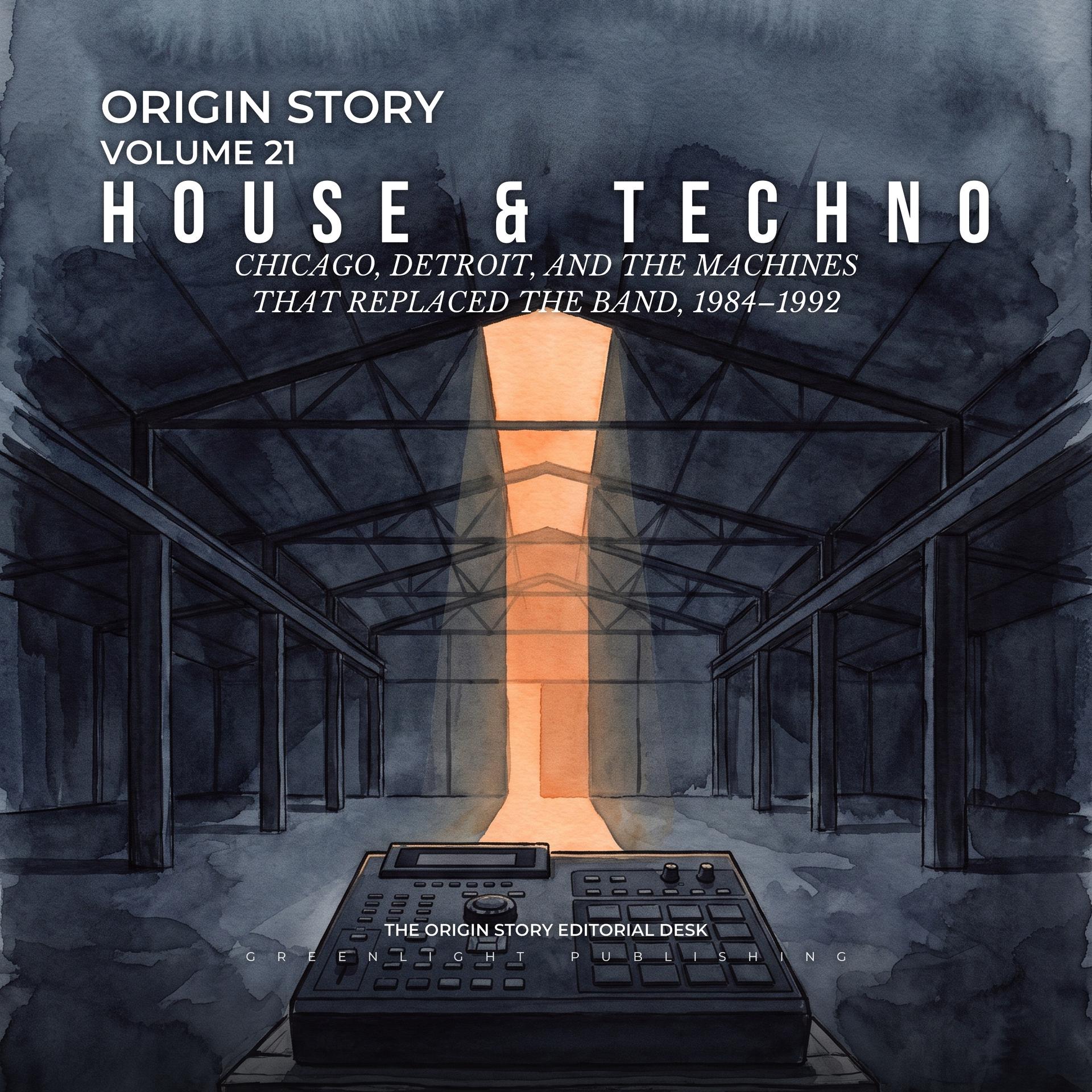
HOUSE & TECHNO
Chicago, Detroit, and the Machines That Replaced the Band, 1984–1992
Written by The Origin Story Editorial Desk
2 hr 55 min
38 chapters
EN
Share
2 hr 55 min
Listening Time
38
Chapters
EN
Language
Greenlight Audio
Produced by
LabelsOrigin Story
About this audiobook
Synopsis
Where it started, what made it possible, who got paid, and why it ended.
On 12 July 1979, between the two games of a baseball doubleheader at Comiskey Park in Chicago, a crate of disco records was blown up on the outfield grass in front of tens of thousands of people, and part of the crowd came over the barriers and tore up the field. Within about a year, American radio had abandoned disco wholesale. The industry withdrew. The audience did not go anywhere.
They went back to the clubs, and this book is about what they made there.
This is the complete story of house and techno in about three hours, and it begins by putting the most common framing exactly backwards: house is not disco's opposite. House is disco's survival — made in a Chicago members' club with a largely Black and gay membership, by a DJ who had come from New York, for people who were still dancing because there was nowhere else for that audience to be. What changed was who could make a record. Nobody in Chicago in 1984 could afford a band, and what they found instead, cheap and second-hand, were three machines that had recently failed: a drum machine discontinued because it did not sound like drums, a second discontinued inside a year, and a small silver bass box so bad at its intended job that it was withdrawn — then made famous by people who could not work out how to program it and started turning its knobs while a sequence ran. One person, an afternoon, a low four-figure sum: a record. It is the lowest barrier to entry in this entire series, and this book explains precisely how the machines, the kick drum on every beat and the twelve-inch format fit together into a music built for a room rather than a listener.
It takes the money seriously, because nobody paid these people to. The most important label in Chicago was owned by the man who owned the pressing plant, and the royalty complaints from that roster have stayed uniform for four decades. Two hundred and fifty miles away, three teenagers in Detroit did the opposite and owned their labels from the first record — a decision whose consequences compound to this day. And then the discovery that reorganised the economics of dance music permanently: the record was the advertisement, the DJ appearance was the product, and a weekend of European bookings could exceed a year of record royalties.
Because that is how this one ends — and it is the only ending of its kind in the series. The music did not exhaust itself and no court stopped it. It emigrated. By 1990 the cities that invented it had largely stopped paying for it, its makers' entire market was three thousand miles away in Europe, and men with internationally famous records were flying home from airports full of fans to ordinary jobs. The kick drum they built is now the rhythmic default of global popular music. The records blown up in that outfield are, most of them, still in print.
Contains no song lyrics. That is a series rule, explained on the first page. In this volume it costs almost nothing — much of this music has no words at all — and where the words matter, and in the two most quoted spoken passages in all of dance music they matter enormously, you will be told what they argue, not how they are worded.
There is a playlist, sequenced to the chapters. It is called ORIGIN STORY: House & Techno.
Origin Story is a history of popular music, one genre at a time — from first record to last, in about three hours each. This is volume twenty-one.
Chapters