Music
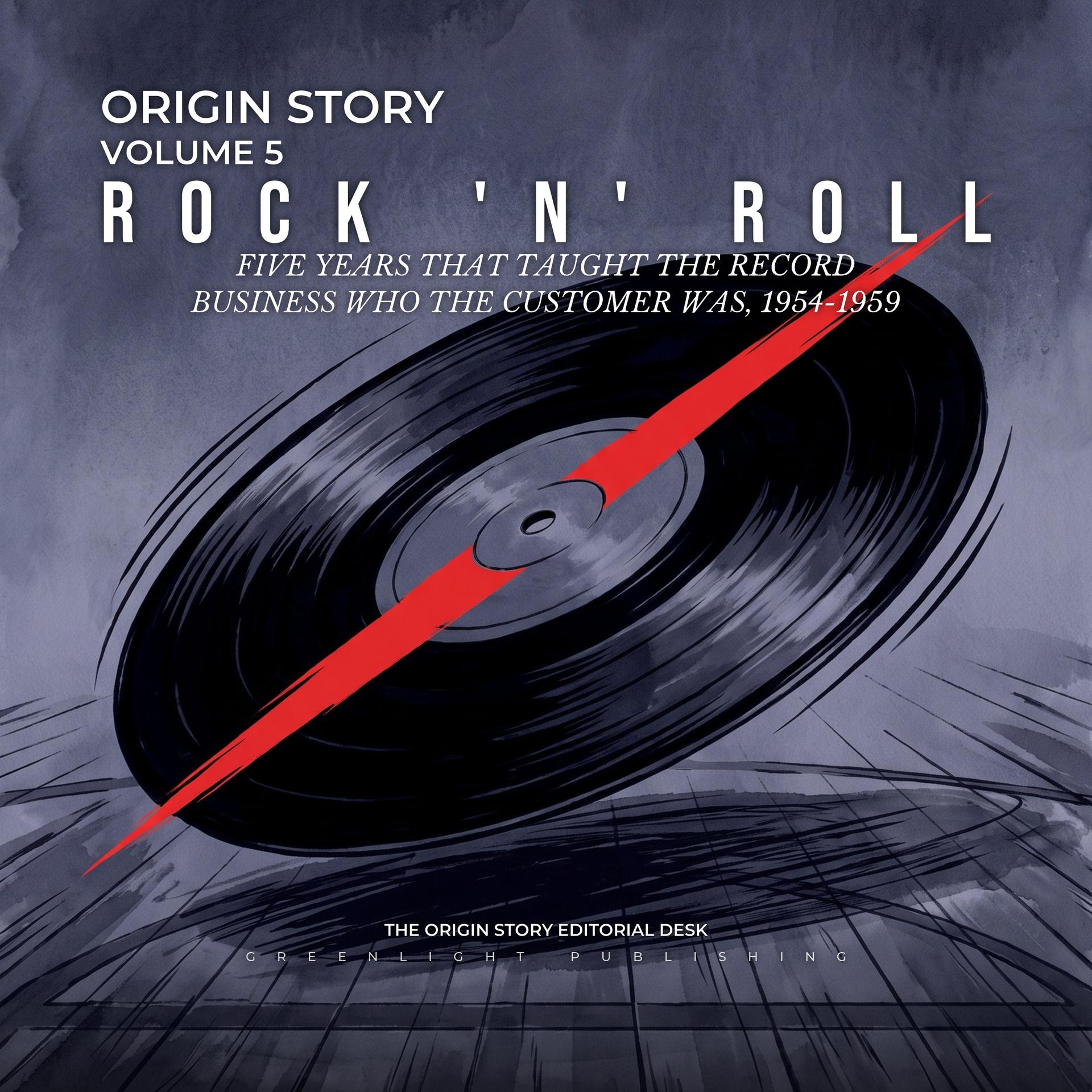
ROCK 'N' ROLL
Five Years That Taught the Record Business Who the Customer Was, 1954-1959
Written by The Origin Story Editorial Desk
3 hr 12 min
31 chapters
EN
Share
3 hr 12 min
Listening Time
31
Chapters
EN
Language
Greenlight Audio
Produced by
LabelsOrigin Story
About this audiobook
Synopsis
Where it started, what made it possible, who got paid, and why it ended.
In 1954 the American record business believed its customer was an adult, and kept its music in three separate charts — pop, rhythm and blues, country — with a wall of custom and radio segregation between them. Five years later the wall was down, the customer was fifteen years old, and the biggest records in the country were coming out of storefront studios in Memphis, New Orleans and Chicago.
This is the complete story of rock 'n' roll in about three hours: the service studio on Union Avenue where a truck driver cut an old blues at the end of a failed session; the Cleveland disc jockey who took a shopkeeper's sales data and renamed rhythm and blues so it could cross the wall; the 45 rpm single — cheap, unbreakable, priced inside a week's allowance — and the teenage wallet, counted by market researchers at ten billion dollars a year, that bought it.
Above all, it takes the money seriously, because this is the volume where the money is the story. The cover-version economy, which re-recorded Black artists' hits for white radio, legally and note for note, and what the 1909 Copyright Act had to do with it. The songwriting credits taken by disc jockeys, landlords and label owners as a routine cost of doing business — Maybellene, Hound Dog, Why Do Fools Fall in Love, presented as the disputes they still are. The two-cent mechanical royalty frozen for seventy years. The colonel who took a quarter of the biggest star on earth, and the publisher who froze a star's bank account and put him on the tour that killed him. And the payola hearings of 1960, which destroyed the era's loudest champion of Black originals, blessed its most diversified businessman as a fine young man, and outlawed the one bribe in the industry that had been paid to the powerless.
It ends with the strangest ending in the series: not a death but an absorption. The plane crash is here, with its economics attached — but the sales figures never fell. The wild market of 1955 was bought, formatted and dissolved, and the records sailed on: to Detroit, to the girl groups, and to Liverpool, where teenagers learned them note for note and mailed them back across the Atlantic a decade later, royalties payable to the same addresses.
Contains no song lyrics. Not one line. That is a deliberate rule, explained on the first page, and what replaces it is a description of what these records actually sound like — the paper buzzing in a torn speaker cone, the backbeat that never swings, the two minutes and ten seconds a jukebox's arithmetic decided.
There is a playlist, sequenced to the chapters. It is called ORIGIN STORY: Rock 'n' Roll.
Origin Story is a history of popular music, one genre at a time — from first record to last, in about three hours each. This is volume five.
Chapters